GATE stands for Gifted and Talented Education. The NNAT® (Naglieri Nonverbal Ability Test) is a reasoning test built around shapes and visual patterns, so a child does not need to read or do math to take it. Washoe County School District (WCSD) uses the third edition, called the NNAT3.
For a fuller overview of the assessment itself, see our guide to what the NNAT® measures.
What GATE gives your child in Washoe County School District
WCSD says GATE services officially begin in 3rd grade, even for children identified in 2nd grade. Services start only after the family returns a one-time opt-in form. Here is what identification can lead to:
- Weekly pull-out time at your own school (grades 3 to 5). In the Itinerant Pull-Out model, students work in a small group with a GATE-endorsed teacher for about 150 minutes a week, usually on a semester-long project built around problem solving and creative thinking.
- A cluster classroom at a few schools. At GEMS (Gifted Education Model for Schools) sites, GATE students are grouped in the same class with a GATE-endorsed teacher instead of being pulled out. WCSD lists Incline and Drake elementary schools and Billinghurst, Depoali, and Marce Herz middle schools.
- SWAS for some students (grades 3 to 5). SWAS (School Within A School) is a full-day, self-contained gifted class for highly and profoundly gifted students at Caughlin Ranch, Drake, and Hunsberger elementary schools, with busing from your zoned school. Students identified in 2nd or 3rd grade are reviewed for it automatically, and invitations start going out in late October.
- Middle school options (grades 6 to 8). A GATE teacher co-teaches inside regular classes (the Itinerant Collaborative model), or students can apply to the full-time Magnet program at Clayton, Marce Herz, Sky Ranch, or Swope middle schools. Magnet admission uses cognitive, reading, and math scores.
- The GATE Institute at Hug High School (grades 10 to 12). WCSD says this program is sunsetting in 2029.
In Washoe, identification keeps mattering after elementary school. The Magnet program requires GATE identification (the only exception is the Magnet-AAP (Accelerated Advanced Placement) track at Clayton, which invites some high-achieving students who are not identified).
Sample question
Try an NNAT® practice question
Choose the piece that continues every line and color across the empty window.
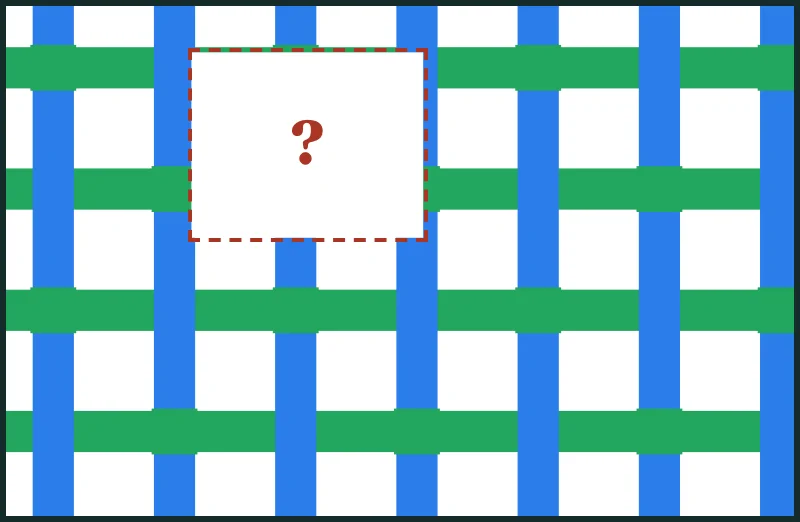
A real GateBuddy practice question.
Choose one of the five answers.
Check all four edges of the upper center window. The correct piece continues every ribbon weave color boundary, corner, and line at the exact same height and angle. Similar colors are not enough if any boundary meets an edge in a different place.
Try 10 more questions free
See how easy practice can be for your child.
- Short practice sets made for kids
- Read aloud, so they can work on their own
- Extra practice where they miss
Free parent account. No credit card.
Practice preview
Let your child see the format before test day.
GateBuddy introduces the visual reasoning formats used on the NNAT® through short, age-appropriate practice with clear explanations.
- Built around the four NNAT® question types
- An explanation after every answer: what changed and what stayed the same
- Short adaptive sets plus full, timed practice tests
- A live view so parents can follow along


Real GateBuddy practice questions, one of each NNAT® question type.
How Washoe identifies gifted students
WCSD gives children three ways to be tested:
- Universal screening in 2nd and 5th grade. Every WCSD 2nd and 5th grader takes the NNAT3 at school. You do not need to sign up.
- A school referral in any grade after 1st. Referrals go through the school counselor and the school’s MTSS (Multi-Tiered System of Supports) team, with a student nomination, teacher checklist, and parent authorization. Referred students are tested in the spring window.
- Outside testing by a licensed psychologist. WCSD also considers individual IQ tests such as the WISC-V (Wechsler Intelligence Scale for Children, Fifth Edition). The district may give its own follow-up test at no cost.
Once a child is tested, WCSD sorts results into three groups:
- 98th percentile or higher on an approved cognitive ability test: automatically eligible for GATE.
- 95th to 97th percentile: scored on a state-approved eligibility matrix that awards points for cognitive, achievement, and other factors.
- 99th percentile or higher on an individual test given by a licensed clinical psychologist: reviewed for a possible Highly Gifted and Talented designation.
| Test basics | What Washoe parents should know |
|---|---|
| Universal test | NNAT3, every 2nd and 5th grader |
| 2026-2027 screening window | August 31 to September 18, 2026 |
| Referral testing | CogAT®, March 1 to 19, 2027 |
| Automatic eligibility | 98th percentile or higher on an approved cognitive ability test |
| 95th to 97th percentile | Reviewed with a state-approved eligibility matrix |
| Retesting | No more than three tests in a WCSD career; never the same test within 12 months |
| Appeals | Written appeal within 30 calendar days of the eligibility notice |
| Results date | Not published; SWAS invitations begin in late October |
| Services begin | 3rd grade, after the opt-in form is returned |
The NNAT® may look nothing like ordinary classwork. Give your child a first look at pattern completion, analogies, serial reasoning, and spatial visualization.
Start free practiceFor a parent-friendly overview of the visual reasoning format, see our guide to the four NNAT® question types.
Retesting and appeals in Washoe
Every child is screened automatically twice in elementary school (2nd and 5th grade). A child can be tested one more time, through a school referral or a parent appeal, for a maximum of three tests in their WCSD career. WCSD will not retest a child on the same test within 12 months of the last one, and it will not use repeat outside IQ tests taken within 12 months either.
To appeal an eligibility decision, a parent must send WCSD’s written GATE Eligibility Appeal Form within 30 calendar days of the eligibility notice. Appeals must point to a problem with the testing conditions (such as a fire drill or technical issue) or with the student (such as illness or test anxiety). Results from outside psychological testing can be sent at any time.
Curious how your child would do? Find out with no pressure.
Try 10 questions free nowElementary schools in Washoe County School District
Washoe sets one districtwide screening window. Each school schedules its own classes inside that window, so your school is the place to ask for your child’s exact day.
Washoe elementary schools include:
- Allen Elementary
- Alice Smith Elementary
- Anderson Elementary
- Beasley Elementary
- Beck Elementary
- Bennett Elementary
- Bohach Elementary
- Booth Elementary
- Brown Elementary
- Cannan Elementary
- Caughlin Ranch Elementary
- Corbett Elementary
- Desert Heights Elementary
- Diedrichsen Elementary
- Dodson Elementary
- Donner Springs Elementary
- Double Diamond Elementary
- Drake Elementary
- Duncan Elementary
- Dunn Elementary
- Elmcrest Elementary
- Gomes Elementary
- Gomm Elementary
- Greenbrae Elementary
- Hall Elementary
- Hidden Valley Elementary
- Huffaker Elementary
- Hunsberger Elementary
- Hunter Lake Elementary
- Incline Elementary
- Inskeep Elementary
- Juniper Elementary
- JWood Raw Elementary
- Kate Smith Elementary
- Lemelson Elementary
- Lemmon Valley Elementary
- Lenz Elementary
- Lincoln Park Elementary
- Loder Elementary
- Mathews Elementary
- Maxwell Elementary
- Melton Elementary
- Mitchell Elementary
- Moss Elementary
- Natchez Elementary
- Palmer Elementary
- Peavine Elementary
- Pleasant Valley Elementary
- Poulakidas Elementary
- Risley Elementary
- Sepulveda Elementary
- Silver Lake Elementary
- Smithridge Elementary
- Spanish Springs Elementary
- Stead Elementary
- Sun Valley Elementary
- Taylor Elementary
- Towles Elementary
- Van Gorder Elementary
- Verdi Elementary
- Veterans Elementary
- Warner Elementary
- Westergard Elementary
- Whitehead Elementary
- Winnemucca Elementary
Washoe also lists Mount Rose K-8: Academy of Languages.
Questions Washoe parents should ask
- When will we get my child’s NNAT3 results, and where will they show up in Infinite Campus?
- What percentile did my child score, and does that put them in the 98th percentile group or the 95th to 97th percentile matrix review?
- When is the opt-in form due, and when will GATE services start at our school?
- Which GATE model does our school use: pull-out, GEMS, or something else?
- When are SWAS invitations sent, and what extra criteria does SWAS use?
- What is the referral deadline for the March 2027 testing window?
- How many of my child’s three lifetime tests have already been used?
Our broader questions to ask your school guide can help you turn those into one clear conversation with the office or program contact.
Short, adaptive practice your child can finish on a school night.
Start 10 free questionsHow to prepare effectively for the NNAT
In Washoe, the NNAT3 comes in the first weeks of 2nd and 5th grade, so most preparation happens over the summer before. (Spring referral testing uses the CogAT®, which is a different test.)
- Start with the format. Show your child each of the four NNAT question types in short sessions, and talk through the rule after every question. A good explanation names the rule, so your child can use it on the next question. GateBuddy shows an explanation after every question that names the rule, and it can read instructions and explanations out loud, which helps a child who is still building reading skills or simply learns better by hearing it.
- Practice 10 to 15 minutes a day, for as long as you can. Reasoning skills build like a muscle, a little at a time. A few weeks of practice helps, but months of short, steady sessions build much more.
- Spend extra time on the weakest type. Most children find one or two question types harder. Focus there once the basics feel familiar. GateBuddy’s practice sets do this for you: each set of five leans toward the question types your child has seen least and adjusts how hard the next questions are based on recent answers. You can also pick one question type and a level (easy, medium, or hard) to work on a weak spot.
- Take full, timed practice tests: at least two, and more is better. A full test is where your child learns pacing and how to work alone against a clock, the way test day works. Every GateBuddy plan includes eight full, timed NNAT® practice tests, so your child can take several along the way and still save the last two for the final few weeks as a dress rehearsal. While your child works on their own, GateBuddy’s Live View lets you follow along from your own phone: how many questions they have answered, the answer they just picked, and how many they have right so far. Your child gets the independence of test day, and you still see everything.
Our guide to how to prepare for the NNAT® goes deeper on each step.
Why GateBuddy
Practice that feels like test day, built by parents who needed it.
GateBuddy started with parents preparing their own kids for the NNAT® and finding mostly printable packets and answer keys. So they built what they wished they had: short daily practice that adapts, full timed tests that feel like test day, and a way to see progress without hovering.
What your child gets:
- Five questions at a time, picked for your childEach short set adapts to your child’s recent answers and to the question types they have seen least. Ten to fifteen minutes fits on a school night.
- Explanations that teach the ruleAfter every question, your child sees what changed and what stayed the same, so the idea carries over to the next one.
- Read aloud when it helpsInstructions and explanations can be read out loud, so a child still learning to read can focus on the reasoning.
- Full, timed practice testsEight full tests with a visible timer, a question list to skip and come back, and pause and resume for real life. Take several along the way and save the last two as dress rehearsals.
- Live view for parentsFollow a practice test from your own phone: questions answered, the answer just picked, and how many are right so far. Your child works on their own, like test day.
- Focused practice when you want itPick one of the four NNAT® question types and a level (easy, medium, or hard) to work on a weak spot.
GateBuddy vs printable packets and workbooks
| Feature | Packets and workbooks | GateBuddy |
|---|---|---|
| Choosing what to practice next | The same pages for every child | Adapts to your child’s answers |
| When an answer is wrong | A letter in the answer key | An explanation of the rule |
| Timed practice | You time it yourself | Built-in timer, skip and return, pause |
| Watching progress | Grade it by hand afterward | Live view while they work |
| Format | Paper | On screen, the way many districts now give it |
Start with 10 free questions.
See how your child handles NNAT® practice questions in about ten minutes, then decide.
Frequently asked questions
Does Washoe County use the NNAT3?
Yes. Washoe County School District says it uses the NNAT3 (Naglieri Nonverbal Ability Test, Third Edition) to screen every 2nd and 5th grader. Spring referral testing uses the CogAT® (Cognitive Abilities Test) instead.
When is Washoe GATE screening in 2026-2027?
WCSD’s 2026-2027 assessment calendar lists universal NNAT3 screening for grades 2 and 5 from August 31 to September 18, 2026, and spring referral and out-of-district testing with the CogAT® from March 1 to 19, 2027.
What score qualifies a Washoe student for GATE?
A score at or above the 98th percentile on an approved cognitive ability test makes a student eligible automatically. Students at the 95th to 97th percentile are scored on a state-approved eligibility matrix that adds achievement and other factors.
When do Washoe GATE services start?
In 3rd grade. A child identified in 2nd grade waits until the start of 3rd grade, and services begin only after the family returns a one-time opt-in form.
What does GATE give my child in Washoe County?
Most identified elementary students get about 150 minutes a week of small-group pull-out work with a GATE-endorsed teacher at their own school. Some qualify for SWAS (School Within A School), a full-day gifted class in grades 3 to 5, and GATE identification is required for the middle school Magnet program.
Can Washoe students retest?
Yes, with limits. Students can be tested no more than three times during their WCSD career, and never on the same test within 12 months of the last one.
- Washoe County School District: GATE identification information
- Washoe County School District: GATE basic information
- Washoe County School District: GATE models of service
- Washoe County School District: SWAS (School Within A School)
- Washoe County School District: Magnet program
- Washoe County School District: GATE eligibility appeal process
- Washoe County School District: 2026-2027 assessment calendars
- Washoe County School District: school directory
GateBuddy compiled this guide from its own research of publicly available information and is not affiliated with Washoe County School District. The guide may contain errors or be out of date. Please confirm all details with your school or district.