Highly Capable is Washington’s term for gifted education services. NNAT® stands for Naglieri Nonverbal Ability Test, a visual reasoning assessment that uses shapes and patterns instead of reading passages, vocabulary, or math computation.
For a fuller overview of the assessment itself, see our guide to what the NNAT® measures.
How Northshore’s process works for a 2nd grader
Northshore uses three steps. For a 2nd grader, nothing starts automatically:
- Referral: a parent, teacher, relative, or community member fills out the Referral and Permission Form. In 2025-2026 the referral window closed October 10.
- Screening: the district reviews data it already has and may give a Naglieri screener (the NNAT3 or the NGAT). To move on, a 2nd grader needs at least one of: the 85th percentile or higher on the screener, the 85th percentile or higher on i-Ready, or current Highly Capable services in math or reading.
- Assessment: with parent permission, the student takes the Iowa Assessments in reading and math, one grade level above their current grade. A 2nd or 3rd grader qualifies with the 95th percentile or higher on one or more content areas of the Iowa.
The district says the NNAT3 alone will not qualify or disqualify a student. It is a gate to the Iowa Assessments, which measure reading and math achievement. Northshore also says it uses no quotas.
| Test basics | What Northshore parents should know |
|---|---|
| Screener | NNAT3 or NGAT (a Naglieri screener) |
| Who is screened | All 1st and 5th graders in fall; 2nd graders only by referral |
| Screener length | 30 minutes, internally timed, on a laptop during the school day (not on a MacBook) |
| Level | Set by the student’s birth date, so classmates may get different levels |
| Screener cutoff to move on | 85th percentile (screener or i-Ready) for 2nd grade |
| Qualifying test | Iowa Assessments in reading and math, 95th percentile or higher |
| Results | Late January to late February by email, with score letters in ParentVUE |
The NNAT® may look nothing like ordinary classwork. Give your child a first look at pattern completion, analogies, serial reasoning, and spatial visualization.
Start free practiceFor a parent-friendly overview of the visual reasoning format, see our guide to the four NNAT® question types.
Sample question
Try an NNAT® practice question
Choose the piece that continues every line and color across the empty window.
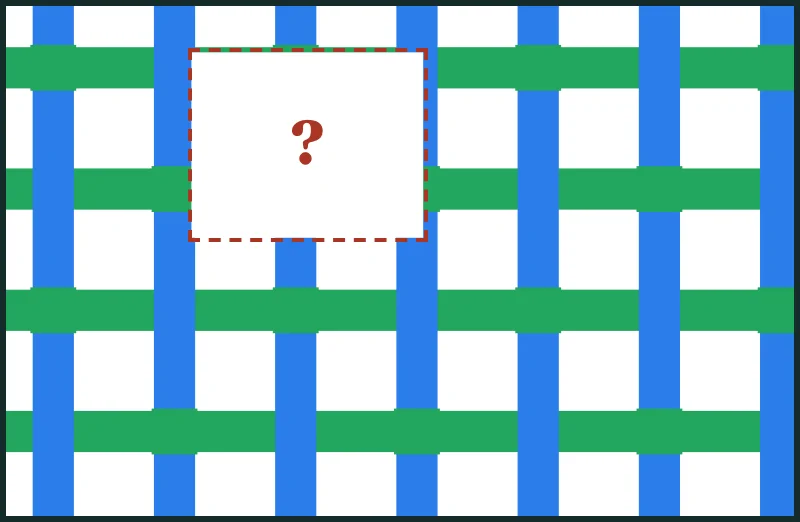
A real GateBuddy practice question.
Choose one of the five answers.
Check all four edges of the upper center window. The correct piece continues every ribbon weave color boundary, corner, and line at the exact same height and angle. Similar colors are not enough if any boundary meets an edge in a different place.
Try 10 more questions free
See how easy practice can be for your child.
- Short practice sets made for kids
- Read aloud, so they can work on their own
- Extra practice where they miss
Free parent account. No credit card.
Practice preview
Let your child see the format before test day.
GateBuddy introduces the visual reasoning formats used on the NNAT® through short, age-appropriate practice with clear explanations.
- Built around the four NNAT® question types
- An explanation after every answer: what changed and what stayed the same
- Short adaptive sets plus full, timed practice tests
- A live view so parents can follow along


Real GateBuddy practice questions, one of each NNAT® question type.
What Highly Capable gives your child in Northshore
- Elementary (2nd to 5th grade): depending on the school, an integrated Highly Capable cluster in a general classroom, in-class differentiation, or HiCap math given above grade level (by rotation, walk-to class, or an online program).
- Elementary Advanced Program (EAP): for students qualified in both reading and math, a self-contained class or integrated cluster working 1 to 2 grade levels ahead. Some neighborhood schools send EAP students to another site; the district lists each school’s 2026-2027 site. Families do not have to change schools to get services.
- Middle school: the Advanced Academic Program (AAP) at every middle school, with AAP English, social studies, and science and math placed by ability. The district is piloting a new science and social studies approach in 2026-2027.
Students who already qualify do not need to retest to keep their qualification.
Elementary schools in Northshore School District
In most districts, a gifted-screening window applies across the district, while each school handles practical details inside that window.
Northshore elementary schools include:
- Arrowhead Elementary
- Canyon Creek Elementary
- Cottage Lake Elementary
- Crystal Springs Elementary
- East Ridge Elementary
- Fernwood Elementary
- Frank Love Elementary
- Hollywood Hill Elementary
- Kenmore Elementary
- Kokanee Elementary
- Lockwood Elementary
- Maywood Hills Elementary
- Moorlands Elementary
- Ruby Bridges Elementary
- Shelton View Elementary
- Sunrise Elementary
- Wellington Elementary
- Westhill Elementary
- Woodin Elementary
- Woodmoor Elementary
Curious how your child would do? Find out with no pressure.
Try 10 questions free nowQuestions Northshore parents should ask
- When does the 2026-2027 referral window close for 2nd graders?
- Which Naglieri screener will my child take this year, and on what date?
- When is the parent permission deadline for the Iowa Assessments?
- What are the Iowa testing dates at our school, and when are makeups?
- What service model and site would my child get at our neighborhood school if they qualify?
- When are the appeal and portfolio review deadlines?
Our broader questions to ask your school guide can help you turn those into one clear conversation with the office or program contact.
How to prepare effectively for the NNAT
- Learn the format. Go through each of the four NNAT® question types, and after every question talk through the rule: what changed and what stayed the same, not just which answer is right. GateBuddy shows an explanation after every question that names the rule, and it can read instructions and explanations out loud, which helps a child who is still building reading skills or simply learns better by hearing it.
- Practice 10 to 15 minutes a day, for as long as you can. Reasoning skills build like a muscle, a little at a time. A few weeks of practice helps, but months of short, steady sessions build much more.
- Spend extra time on the weakest type. Most children find one or two question types harder. Focus there once the basics feel familiar. GateBuddy’s practice sets do this for you: each set of five leans toward the question types your child has seen least and adjusts how hard the next questions are based on recent answers. You can also pick one question type and a level (easy, medium, or hard) to work on a weak spot.
- Keep reading and math strong. Students who pass the screener take the Iowa Assessments in reading and math one grade level up, so everyday reading and math practice matters too.
- Take full, timed practice tests: at least two, and more is better. A full test is where your child learns pacing and how to work alone against a clock, the way test day works. Every GateBuddy plan includes eight full, timed NNAT® practice tests, so your child can take several along the way and still save the last two for the final few weeks as a dress rehearsal. While your child works on their own, GateBuddy’s Live View lets you follow along from your own phone: how many questions they have answered, the answer they just picked, and how many they have right so far. Your child gets the independence of test day, and you still see everything.
Practice teaches your child what the questions look like and gives them ways to approach and think through them, so test day feels familiar instead of surprising.
Why GateBuddy
Practice that feels like test day, built by parents who needed it.
GateBuddy started with parents preparing their own kids for the NNAT® and finding mostly printable packets and answer keys. So they built what they wished they had: short daily practice that adapts, full timed tests that feel like test day, and a way to see progress without hovering.
What your child gets:
- Five questions at a time, picked for your childEach short set adapts to your child’s recent answers and to the question types they have seen least. Ten to fifteen minutes fits on a school night.
- Explanations that teach the ruleAfter every question, your child sees what changed and what stayed the same, so the idea carries over to the next one.
- Read aloud when it helpsInstructions and explanations can be read out loud, so a child still learning to read can focus on the reasoning.
- Full, timed practice testsEight full tests with a visible timer, a question list to skip and come back, and pause and resume for real life. Take several along the way and save the last two as dress rehearsals.
- Live view for parentsFollow a practice test from your own phone: questions answered, the answer just picked, and how many are right so far. Your child works on their own, like test day.
- Focused practice when you want itPick one of the four NNAT® question types and a level (easy, medium, or hard) to work on a weak spot.
GateBuddy vs printable packets and workbooks
| Feature | Packets and workbooks | GateBuddy |
|---|---|---|
| Choosing what to practice next | The same pages for every child | Adapts to your child’s answers |
| When an answer is wrong | A letter in the answer key | An explanation of the rule |
| Timed practice | You time it yourself | Built-in timer, skip and return, pause |
| Watching progress | Grade it by hand afterward | Live view while they work |
| Format | Paper | On screen, the way many districts now give it |
Start with 10 free questions.
See how your child handles NNAT® practice questions in about ten minutes, then decide.
Frequently asked questions
Does Northshore use the NNAT3?
Yes, as a screener. Northshore says it may give the NNAT3 or the NGAT (Naglieri General Ability Test). The screener alone does not qualify or disqualify a student; qualifying depends on the Iowa Assessments.
Are Northshore 2nd graders screened automatically?
No. Northshore universally screens 1st and 5th graders in the fall. A 2nd grader must be referred with the Referral and Permission Form before the district screens and assesses them.
How is the Northshore NNAT3 administered?
Northshore says the NNAT3 is given on a laptop during the school day, with 30 minutes to complete it. It cannot be taken on a MacBook.
What scores does a Northshore 2nd grader need?
To move from screening to the Iowa Assessments, a 2nd grader needs the 85th percentile or higher on the screener or on i-Ready, or current Highly Capable services. To qualify, they need the 95th percentile or higher on one or more content areas of the Iowa.
When are Northshore results shared?
In the 2025-2026 timeline, parent notifications went out by email from late January to late February, with score letters posted in ParentVUE.
- Northshore School District: NNAT3 Overview
- Northshore School District: Screening
- Northshore School District: Assessment
- Northshore School District: Refer a Student
- Northshore School District: Timeline
- Northshore School District: Service Models
- Northshore School District: Advanced Academic Program
- Northshore School District: Schools and Boundaries
- Northshore School District: Elementary Advanced Program
GateBuddy compiled this guide from its own research of publicly available information and is not affiliated with Northshore School District. The guide may contain errors or be out of date. Please confirm all details with your school or district.