GATE stands for Gifted and Talented Education. In Gahanna-Jefferson, GATE is the name of the district’s elementary reading and math program for qualifying gifted students. NNAT® stands for Naglieri Nonverbal Ability Test, a visual reasoning assessment built around shapes and patterns. The district calls it the Naglieri Nonverbal Abilities Test.
For a fuller overview of the assessment itself, see our guide to what the NNAT® measures.
What Gahanna-Jefferson says about screening
GJPS screens whole grades in two ways, and no sign-up is needed for either:
- NNAT in grades 2 and 5: every student takes it in November, which screens for superior cognitive ability and creative thinking.
- MAP Growth in grades 2 through 10: every time students take MAP (Measures of Academic Progress), the district checks for gifted identification in reading and math. The state sets that at the 95th percentile.
For the NNAT, the district says required scores are set by the state and vary by test and age. GJPS does not publish a single cutoff on its gifted page.
Families can also refer a child in grades K-12 for individual testing. Referrals received August 1 to September 10 are tested in the first semester. Later referrals, through April 1, are tested in the second semester, and referrals after April 1 wait until the next school year. Referrals for reading and math testing are not accepted in grades 2-11 because those grades already take MAP. Students new to GJPS can be tested within 90 days of enrolling if the family asks.
| Test basics | What Gahanna-Jefferson parents should know |
|---|---|
| Test | NNAT (Naglieri Nonverbal Ability Test) |
| Screened grades | 2nd and 5th grade |
| Timing | November |
| Qualifying score | Set by the state; not published on the district’s gifted page |
| Services | Formal gifted services begin in grade 3 |
| Referral windows | August 1 to September 10 for first semester; through April 1 for second semester |
The NNAT® may look nothing like ordinary classwork. Give your child a first look at pattern completion, analogies, serial reasoning, and spatial visualization.
Start free practiceFor a parent-friendly overview of the visual reasoning format, see our guide to the four NNAT® question types.
Sample question
Try an NNAT® practice question
Choose the piece that continues every line and color across the empty window.
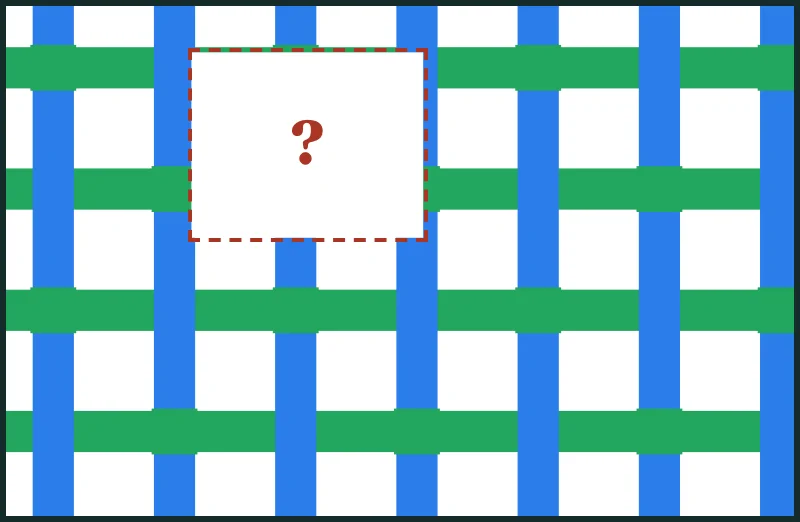
A real GateBuddy practice question.
Choose one of the five answers.
Check all four edges of the upper center window. The correct piece continues every ribbon weave color boundary, corner, and line at the exact same height and angle. Similar colors are not enough if any boundary meets an edge in a different place.
Try 10 more questions free
See how easy practice can be for your child.
- Short practice sets made for kids
- Read aloud, so they can work on their own
- Extra practice where they miss
Free parent account. No credit card.
Practice preview
Let your child see the format before test day.
GateBuddy introduces the visual reasoning formats used on the NNAT® through short, age-appropriate practice with clear explanations.
- Built around the four NNAT® question types
- An explanation after every answer: what changed and what stayed the same
- Short adaptive sets plus full, timed practice tests
- A live view so parents can follow along


Real GateBuddy practice questions, one of each NNAT® question type.
What GATE gives your child in Gahanna-Jefferson
GJPS provides formal gifted services starting in grade 3, depending on the area of identification. Each winter or spring, the district sends families of identified students a notice about service eligibility for the next year. In elementary school:
- GATE Math, grades 3-5: requires identification in both superior cognitive ability and math. Students leave their classroom for a compacted, faster math course with a gifted intervention specialist, and learn more than half of 7th grade math by the end of 5th grade.
- GATE Reading, grades 4-5: requires superior cognitive ability identification. Students get extra reading and writing work with a gifted intervention specialist.
- Tier II math and reading, grades 4-5: for students gifted in superior cognitive ability, reading, or math who are not in GATE. They are grouped together in a regular classroom, with support from a gifted specialist.
GATE is offered at Goshen Lane and High Point elementary schools, and Tier II is offered at all elementary schools. In middle school, ACE English Language Arts 6 requires superior cognitive or reading identification, and ACE Math placement uses MAP scores, sometimes combined with a cognitive score.
Elementary schools in Gahanna-Jefferson Public Schools
In most districts, a gifted-screening window applies across the district, while each school handles practical details inside that window.
Gahanna-Jefferson elementary schools include:
- Blacklick Elementary
- Chapelfield Elementary
- Goshen Lane Elementary
- High Point Elementary
- Jefferson Elementary
- Lincoln Elementary
- Royal Manor Elementary
Curious how your child would do? Find out with no pressure.
Try 10 questions free nowQuestions Gahanna-Jefferson parents should ask
- What exact date is my child’s class taking the NNAT in November?
- When and how are 2nd grade screening results shared with families?
- What score does my child need on the NNAT to be identified in superior cognitive ability?
- If my child qualifies, what gifted services are available in their current grade and later grades?
- When do referral windows open and close for additional testing?
Our broader questions to ask your school guide can help you turn those into one clear conversation with the office or program contact.
How to prepare effectively for the NNAT
Useful prep is about knowing the format, not cramming. A simple plan:
- Learn the format first. Work through a few questions of each of the four NNAT® question types together, and after each one have your child say the rule out loud: what changed and what stayed the same. Our guide to the four NNAT® question types shows each one. GateBuddy shows an explanation after every question that names the rule, and it can read instructions and explanations out loud, which helps a child who is still building reading skills or simply learns better by hearing it.
- Practice 10 to 15 minutes a day, for as long as you can. Reasoning skills build like a muscle, a little at a time. A few weeks of practice helps, but months of short, steady sessions build much more.
- Spend extra time on the weakest question type. Once you see which type your child misses most, give it a larger share of each session. GateBuddy’s practice sets do this for you: each set of five leans toward the question types your child has seen least and adjusts how hard the next questions are based on recent answers. You can also pick one question type and a level (easy, medium, or hard) to work on a weak spot.
- Take full, timed practice tests: at least two, and more is better. A full test is where your child learns pacing and how to work alone against a clock, the way test day works. Every GateBuddy plan includes eight full, timed NNAT® practice tests, so your child can take several along the way and still save the last two for the final few weeks as a dress rehearsal. While your child works on their own, GateBuddy’s Live View lets you follow along from your own phone: how many questions they have answered, the answer they just picked, and how many they have right so far. Your child gets the independence of test day, and you still see everything.
Practice teaches your child what the questions look like and ways to approach them, so test day feels familiar. Our guide to how to prepare for the NNAT® gives a simple weekly plan.
Why GateBuddy
Practice that feels like test day, built by parents who needed it.
GateBuddy started with parents preparing their own kids for the NNAT® and finding mostly printable packets and answer keys. So they built what they wished they had: short daily practice that adapts, full timed tests that feel like test day, and a way to see progress without hovering.
What your child gets:
- Five questions at a time, picked for your childEach short set adapts to your child’s recent answers and to the question types they have seen least. Ten to fifteen minutes fits on a school night.
- Explanations that teach the ruleAfter every question, your child sees what changed and what stayed the same, so the idea carries over to the next one.
- Read aloud when it helpsInstructions and explanations can be read out loud, so a child still learning to read can focus on the reasoning.
- Full, timed practice testsEight full tests with a visible timer, a question list to skip and come back, and pause and resume for real life. Take several along the way and save the last two as dress rehearsals.
- Live view for parentsFollow a practice test from your own phone: questions answered, the answer just picked, and how many are right so far. Your child works on their own, like test day.
- Focused practice when you want itPick one of the four NNAT® question types and a level (easy, medium, or hard) to work on a weak spot.
GateBuddy vs printable packets and workbooks
| Feature | Packets and workbooks | GateBuddy |
|---|---|---|
| Choosing what to practice next | The same pages for every child | Adapts to your child’s answers |
| When an answer is wrong | A letter in the answer key | An explanation of the rule |
| Timed practice | You time it yourself | Built-in timer, skip and return, pause |
| Watching progress | Grade it by hand afterward | Live view while they work |
| Format | Paper | On screen, the way many districts now give it |
Start with 10 free questions.
See how your child handles NNAT® practice questions in about ten minutes, then decide.
Frequently asked questions
Does Gahanna-Jefferson use the NNAT?
Yes. Gahanna-Jefferson says all students in grades 2 and 5 are screened when they take the Naglieri Nonverbal Abilities Test (NNAT) in November.
When is Gahanna-Jefferson gifted screening?
The district says 2nd and 5th grade students take the NNAT in November. Reading and math screening happens each time students in grades 2 through 10 take the MAP test.
What gifted services does Gahanna-Jefferson describe?
Formal services begin in grade 3. GATE Math in grades 3-5 requires superior cognitive ability and math identification, GATE Reading in grades 4-5 requires superior cognitive ability identification, and Tier II classroom clusters serve grades 4-5.
Can families refer a student for gifted testing?
Yes. Referrals for grades K-12 received August 1 to September 10 are tested in the first semester. Later referrals, through April 1, are tested in the second semester.
- Gahanna-Jefferson Public Schools: Gifted Education
- Gahanna-Jefferson Public Schools: Gifted and Talented Department Brochure (PDF)
- Gahanna-Jefferson Public Schools: Directory
GateBuddy compiled this guide from its own research of publicly available information and is not affiliated with Gahanna-Jefferson Public Schools. The guide may contain errors or be out of date. Please confirm all details with your school or district.